
Stellenbosch FC's chief executive has detailed the club's unique financial model, confirming it will not draw on the vast resources of its majority shareholder, the Remgro Group. Speaking on Metro FM’s Sports Night Amplified with Andile Ncube this week, CEO Benadie explained the Winelands club is treated as a 100% investment but operates with a mandate for self-sustainability.
Remgro operates with a decentralised management system, Benadie said. "It's got a decentralised management system that Remgro operates with, which means that the different business entities that they are invested in, happen to be 100% investment, which is Stellenbosch Football Club," he explained. This structure classifies the club as an impact investment, similar to Remgro's other sports and community projects, rather than a profit-driven business.
Benadie acknowledged a common misconception that the club has deep pockets. "That is true. I mean, we do get a bit of that from the start." he noted. The club's strategy is to be financially sustainable and at least break even, focusing on discovering talent within its region instead of making expensive signings.
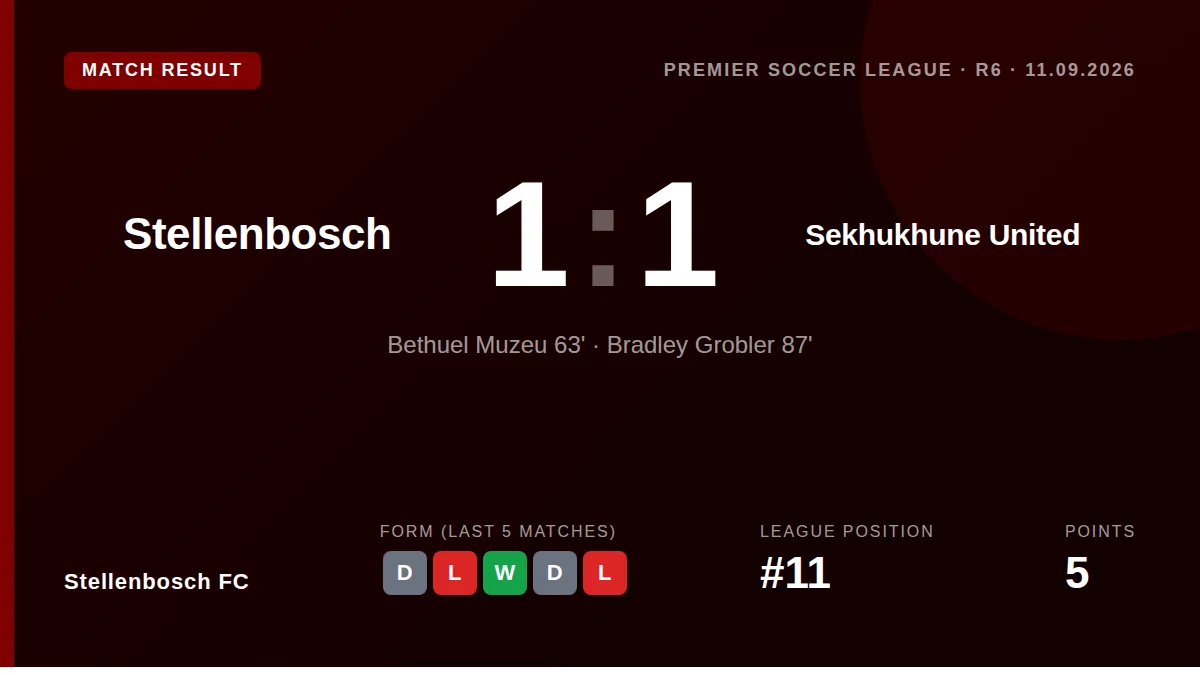
This philosophy comes as Stellenbosch sits 9th in the Premier Soccer League with 6 points from six matches. Their recent form shows one win, three draws, and one loss from the last five outings, a run that includes a 1-1 draw with Sekhukhune United last Thursday where Bradley Grobler scored a late equaliser. The club has scored and conceded seven goals this season, leaving them with a zero goal difference and 14 points behind leaders Mamelodi Sundowns.
Benadie refuted claims that Stellenbosch only sells its best players to bigger rivals, emphasising a focus on talent development. He also said the club has not faced major sponsorship difficulties, unlike some PSL peers, but monitors the transfer market without breaking the bank. While the strategy could change in future, the current model prioritises stability. Fans can track the team's progress in the standings and view the full squad list. The next challenge is continuing this sustainable build while improving on their mid-table position.